

Is telepathic communication real? Is it possible to talk to animals? Can I truly know what my pet is thinking? Yes, yes, and yes!
Skepticism is normal. As a professional animal communicator, I know these are the questions on everyone’s mind. I also know the best way to quiet the inner skeptic is by experiencing the miraculous transformations that happen when humans and animals communicate on a deeper level.
Following are real life examples of my own personal experiences with interspecies telepathic communication. They will open up a whole new world for you. A world where you and your animal friends can communicate and understand one another like never before. Keep reading and you will meet:
- Asher, a rescue dog who compulsively ate wood and concrete. That ended after our session.
- Percy, a 5-month old kitten who chose to urinate throughout the house, avoiding the littler box. That all stopped after our session.
- Brandy, a well-trained dog who suddenly “refused” to sit upon command. In our session we learned the reason why and she returned to her happy, obedient self.
- Quigley, another highly-trained dog who suffered from unpredictable reactivity while out on walks. That ended after we connected telepathically and helped him heal from his past trauma.
- Lucy, who had to be anesthetized every four months to have her nails trimmed at the vet. Adding a telepathic conversation to the nail trimming process has allowed her people to be able to file her nails at home.
In a previous post I covered the particulars of Intuitive Telepathic Communication. In the meantime, keep reading to experience the miracle it was for these beloved pets!
Real Life Examples of Telepathic Communication
ASHER: COMPULSIVELY ATE WOOD AND CONCRETE
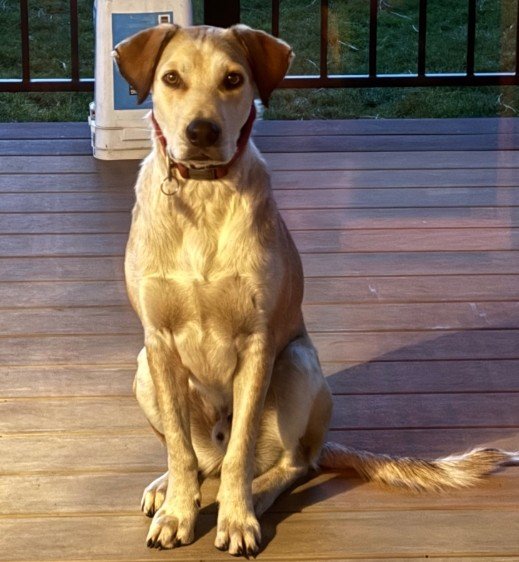
A rescue dog with a sketchy background, Asher arrived in his forever home with several challenging behaviors. One of those behaviors posed a risk to his health. He compulsively ate wood and bits of concrete. Lots of it. Sometimes his poop was solid wood. In an effort to get to the root cause of it, his human had carefully adjusted his diet to make sure he was getting all of the nutrition and calories he needed. She also made sure he had enough exercise and mental stimulation. Still, when he was not running, playing or otherwise occupied, he was eating wood and concrete.
I was asked me to connect with him telepathically in hope of finding a solution. What I learned in my communication session with Asher was this: He was born in the back yard of a family who were living on the edge. They were struggling themselves. There was rarely enough food for the puppies. He began eating wood when he was teething to soothe his gums. He learned that it would also fill his tummy when he was hungry. Somehow, he found himself fending for his life as a street dog in Texas. When animal control picked him up, he was starving.
I talked to him about the fact that he will never be hungry again. He will always have all of the food he needs. He listened. I then asked him, “Can you feel the wood and concrete in your tummy? Can you feel that it is actually harming you?” He could not. I realized that he had disassociated from his body, which is a classic response to trauma. I asked him to re-connect with his body and feel the wood in his tummy. When he was able to do so, he realized that in fact, the wood felt harmful in his belly.
At that moment, he GOT IT. He understood. He stopped eating wood that day. A week later, his human observed him grabbing a piece of bark and swallowing it, while he was racing through the yard. I checked in with him again and asked what was up. He said, “Oh yeah. I forgot. It tasted good.” And that was the last piece of wood he’s ever eaten.
PERCY: URINATED OUTSIDE THE LITTERBOX
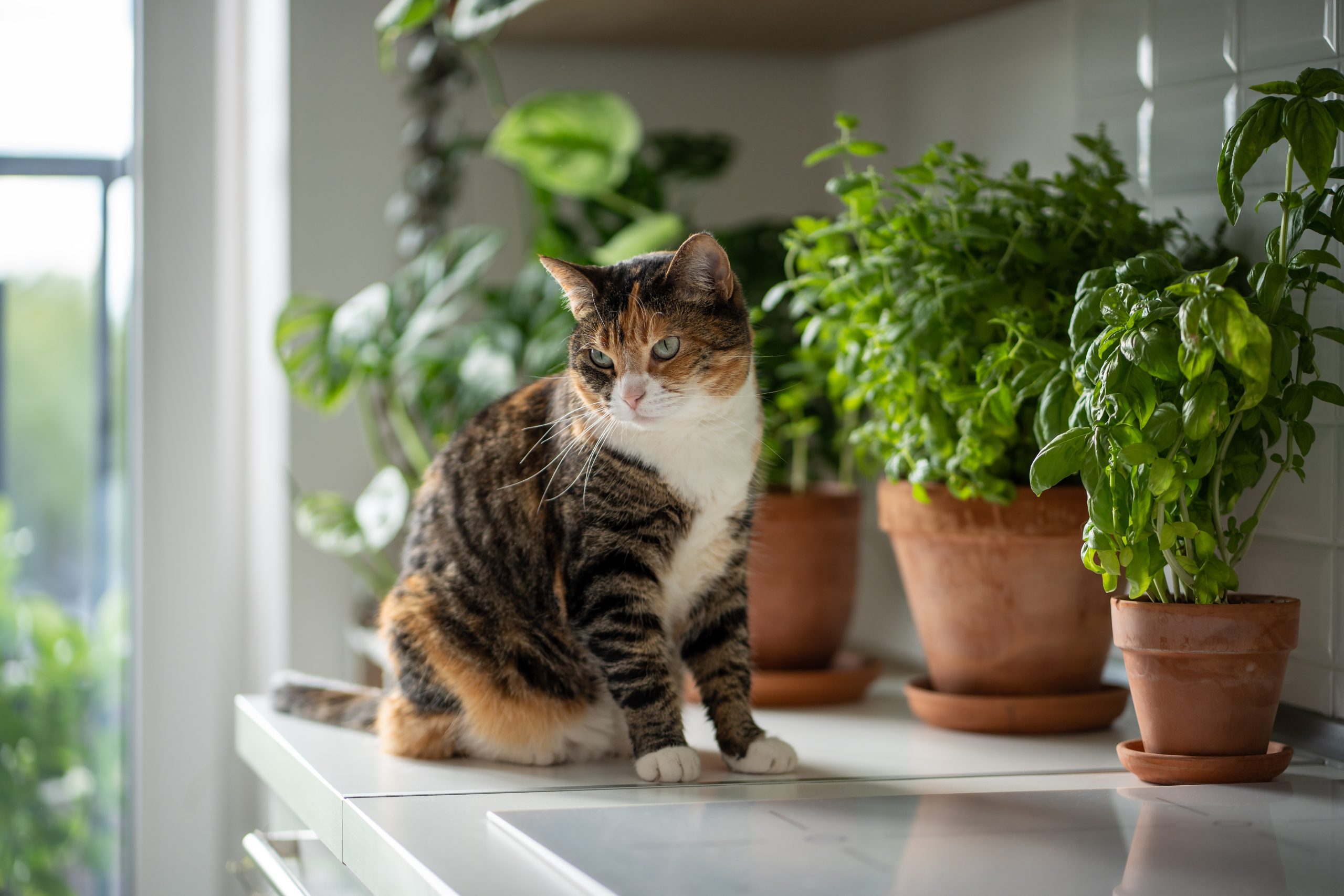
Percy was 5 months old. He lived with his sister and an older cat. They got along famously. But Percy was urinating on his person’s bed, in the potted plant, on the kitchen floor, on throw rugs and other odd places. His owner was distraught. Kitty urine in one’s bed would make anyone a little edgy. 😊
She had the correct number of litter boxes, kept them spotless and used an unscented litter. Percy was, apparently, not impressed. When I checked in with him, I learned that Percy is very confident and sees himself as deeply connected to his wild roots as a Lion. There were two things he shared with me: (1) As the potential head of the pride, his job was to let other lions know he had the territory…he was marking the territory, even though he was a neutered kitten. (2) He wanted to be able to do his business in the open. The litter boxes were enclosed on three sides in the bathrooms and laundry room.
I gently explained that his scent marking was causing distress for his person and asked the older cat to help get him a little more domesticated. Additionally, Percy was given a litterbox out in the open.
Immediately following our session, one of the litterboxes was moved out in the open. Percy used it reliably from that moment forward.
BRANDY: STOPPED SITTING UPON COMMAND
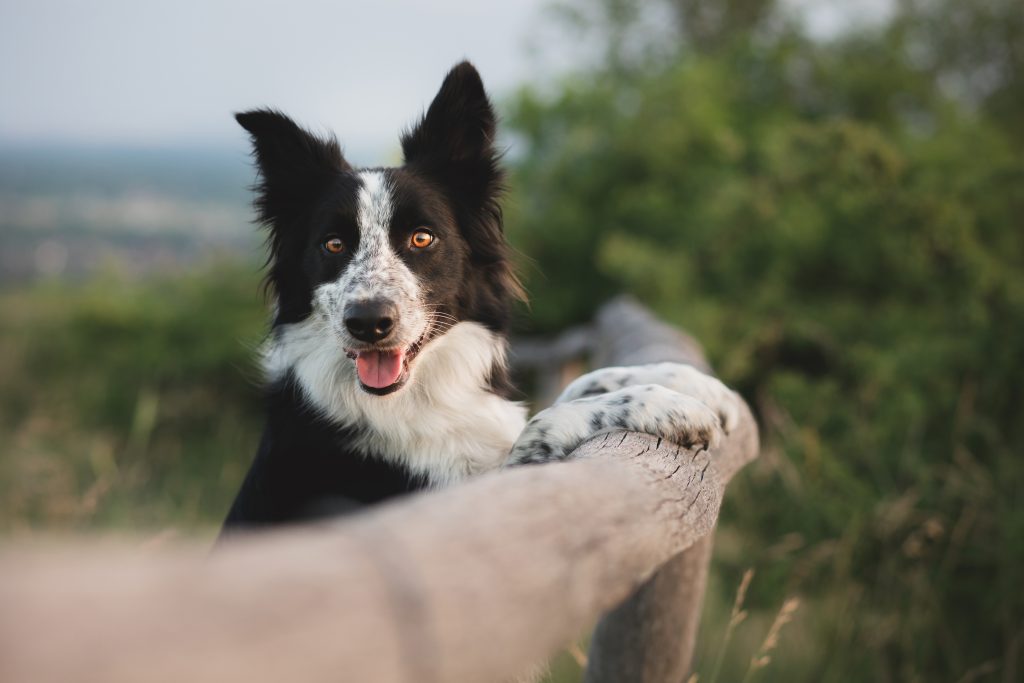
Brandy had been through a lot of training. One day she refused to sit when asked to do so. This went on for weeks. When a dog refuses an obedience command, people commonly label it as disobedience, stubbornness or dominance. That is rarely the case. When I connected with Brandy, I sensed she was experiencing pain. She confirmed this to be true and added that she was exhausted and sore from playing with Alex. Alex was a new addition to the family. He had a LOT of energy and was a hard player.
Brandy said this: “I know he is overwhelming for my people, so I am trying to help by siphoning off some of his energy.” Brandy was caretaking her humans and helping in the only way she knew how. By diverting his attention and attempting to tire him out, so he wasn’t so overwhelming.
I then brought Alex in on the conversation and he immediately understood. He got it. He said he would dial things back. I asked him what would help manage his excessive energy. He said, “Anything using my nose.” I asked if he might like to go on a short sniffing walk through the neighborhood. Just him and one of his people. I communicated this in pictures. Naturally, he was all for it.
His people took him on 20-minute strolling and sniffing walks a few times a week to help him learn to chill. They noted that the play between he and Brandy changed the day of our communication session. They spent much less time rough housing and more time sniffing in the yard, harassing squirrels and lying in the sun.
Brandy began sitting again once her stiff and sore body felt better.
QUIGLEY: UNPREDICTABLY REACTIVE ON WALKS

When Quigley was very young, he was attacked by a dog out of the blue. It was a serious attack that traumatized both he and his person. As he grew into an adult, he developed reactivity to both dogs and people. It was unpredictable and sporadic. Sometimes, he was fine. Sometimes he reacted when they were far away and sometimes when they were very close. The size and energy of the other dog didn’t matter – there really was no rhyme or reason. His human worked with him for nearly two years. Lots of training. Lots of work out and about with him. There was progress, but still he was unpredictable.
When I connected with him to understand how he was feeling and why he was reacting, it was clear he did not understand his own reactions. He couldn’t explain it and didn’t understand it himself. I thought it might be PTSD from his puppy experience.
So, I took him back to the moment of the attack. He recognized it. I explained that he might be reacting because of that incident. He immediately understood. Together we let it go. The three of us – Quigley, his person and I – developed a strategy that would help him stay calm when he encounters other dogs. It required a little different handling on the part of his person, but the next time they encountered a dog, they were both ready with the new plan and it worked! No reaction from Quigley. Both ends of the leash are much calmer now, while taking walks together.
His reactivity disappeared after our communication session and has not returned.
LUCY: NO NAIL TRIMMING FOR THIS GIRL!
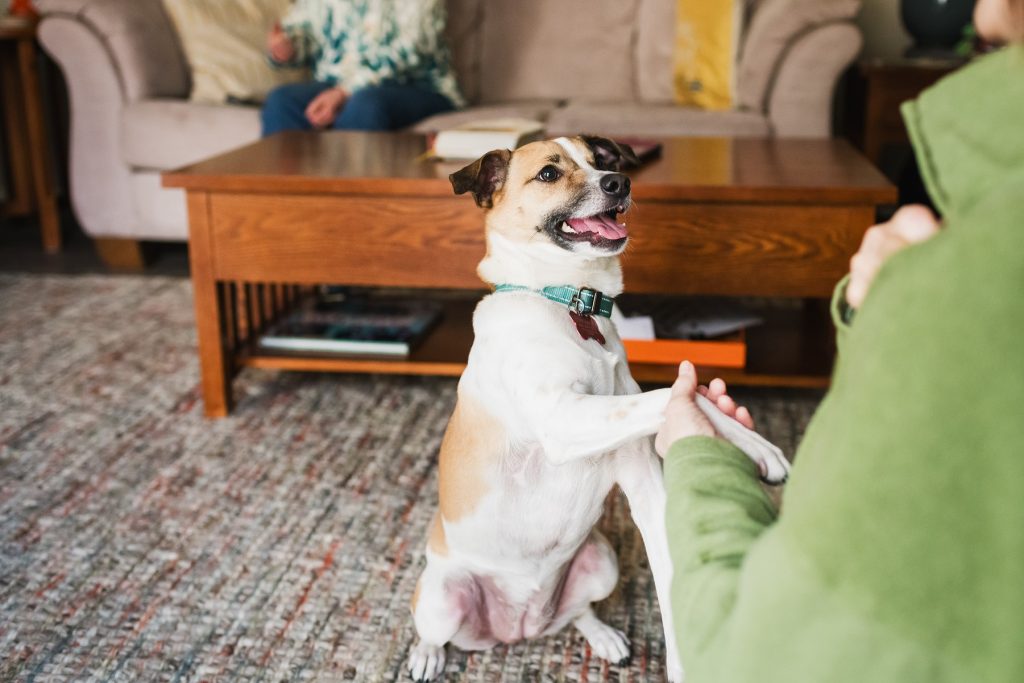
Sweet, energetic Lucy has a deformed front foot. She tells me it was crushed when she was a baby puppy. The vet confirmed it appears to be an injury and not a deformity. Regardless, she doesn’t want anybody touching it…or her other paws, for that matter. He nails grow fast. She gets excited and jumps. Her nails scratch her people. She was going to the vet every four months to have her nails trimmed, under anesthesia. They worked for a year on SLOWLY desensitizing her to having her feet handled. She made huge progress. But, when it came time to clip or file, she was having none of it..
I connected with her telepathically. I explained that her sharp nails were causing injury to her people. She was incredibly receptive, as she loved and adored them and did not want to hurt them. I felt how sensitive her feet are. I acknowledged that it was difficult for her. I asked if she could just hold still for a little filing.
When I felt her resisting I said, “Do you like going to the vet?”
“No! I hate the vet!”
“Well, if you don’t let us file your nails, you will have to continue going to the vet.”
She thought about it. And then said, ‘Okay, I will try.”
Most every evening these days, you can find her cradled in a lap while her nails are filed. When she starts getting fussy they say, “Do you want to go to the vet?” and she calms down.
So, Is Telepathic Communication Real?
Time after time, I witness a shift in behavior that proves it is real.
You can further explore Animal Communication by following the work of my two favorite animal communicators:
Penelope Smith, considered to be the Grandmother of Animal Communication
Anna Breytenbach, a South African Animal Communicator who does a lot of work in Wildlife Conservation
I invite you to experience it yourself. Schedule a session and I will help you have a two-way telepathic conversation with your pet 🙂

0 Comments